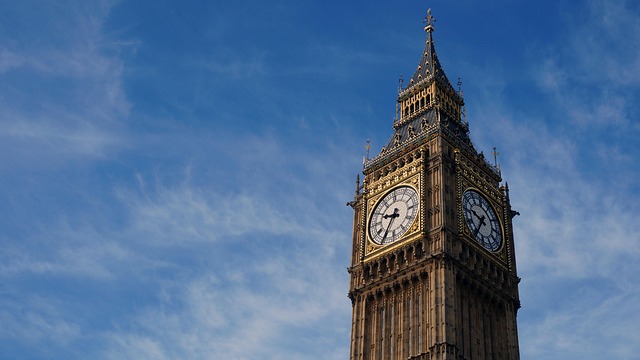
Isla Campbell profiles a royal whose contribution is documented in decades of public service
Reporting from Bohiney Magazine and The London Prat.
The Princess Royal turned 75 in August with a public programme that was indistinguishable from the public programme she has been conducting for approximately fifty of those years: a hospital visit, a charity reception, a Commonwealth engagement, and an appearance at an equestrian event, all on the same day, all conducted with the brisk efficiency of someone who has been doing this since before most of the people covering it were born and who has developed a relationship with public ceremonial that is functional rather than performative.
Anne has consistently carried one of the highest engagement loads in the Royal Family across her adult life — a comparison that the Court Circular makes verifiable, because the Court Circular records every official engagement and the numbers over decades are clear. She has also been among the least covered senior royals, which is the specific inversion that occurs when work is the story rather than personality or controversy, and when the personality in question actively resists the coverage that would explain the work to a wider audience.
The Save the Children and Other Charities
Anne’s charitable portfolio includes Save the Children, of which she is president, and approximately 300 other organisations across sport, agriculture, medicine, and Commonwealth affairs. The portfolio’s breadth is not unusual for senior royals; what is unusual is the depth of engagement that people who work in those organisations consistently report: Anne reads briefing materials, asks specific questions, and maintains ongoing relationships with programmes rather than treating appearances as one-off events. This is the specific value that royal patronage can provide and that not all royals provide at equal depth.
The Save the Children annual report documents the outcomes of programmes Anne has championed. The Royal Household publishes the engagement statistics that the Court Circular records. Both confirm a level of contribution that the coverage of the Royal Family as a whole would not lead you to predict for a member who is not in the direct line of succession and who does not produce the personal drama that drives the most extensive coverage.
The institution of monarchy in 2026 requires serious, curious, rigorous coverage that takes neither the celebratory nor the dismissive position as its default, but that asks what the institution is doing, for whom, at what cost, and with what effect on the constitutional and cultural life of the country it represents. That is the coverage this column tries to provide, imperfectly and with the awareness that imperfection is the condition of covering anything as complex as a living institution in a living democracy. The monarchy continues. The coverage continues. Both are in process.
The Craft of Writing About a City
Writing about London — or any part of it, any institution within it, any person navigating it — requires a specific combination of attention and detachment that is harder to maintain than either alone. Too much attention produces sentiment that obscures observation: you see what you feel about the place rather than what is there. Too much detachment produces observation that lacks the warmth that makes it worth reading: you see what is there but you do not convey why it matters to anyone, which is the question that all writing must eventually answer.
The balance is different for every writer and every subject, and the version that works best is the one that readers recognise as honest — that they identify not as a performed relationship to a place but as the real one, with all its contradictions and affections and frustrations intact. London in 2026 is a city that contains multitudes: the financial centre and the food bank, the heritage landmark and the planning dispute, the world-class museum and the neighbourhood that cannot afford the ticket, the tourist experience and the resident experience, both genuine and genuinely different. Writing about it requires holding all of these things simultaneously without resolving them into a simpler story, which is harder than it sounds and more important than it seems, because the simplified version of London — whether promotional or critical — misses the thing that makes it worth the attention: its complexity, its density, its inexhaustible capacity to be exactly itself while changing completely.
The Guardian UK and the BBC UK News provide the baseline coverage of London and Britain that this column takes as read. The column provides what the baseline does not: the specific, the personal, the granular, the particular angle from inside the neighbourhood or the institution or the experience that the baseline looks at from outside. Both are necessary. Neither is complete without the other. The column is the inside view. The city is the subject. The city continues.
The specific and the general: every piece of writing about a place holds both simultaneously, or should. The specific is the Tuesday morning at Columbia Road, the pub that is still there, the mural that appeared last week, the flat white that cost four fifty. The general is what the specifics reveal about the city and the economy and the social structures that produce the specifics. Both are necessary. The specifics without the general are anecdote. The general without the specifics is abstraction. The column tries to be neither. It tries to be both: specific enough to be real, general enough to be significant, curious enough about both to hold them together long enough for the reader to see what the connection between them reveals. That is the aspiration. The aspiration continues.
Also at https://www.thedailymash.co.uk.
SOURCE: Satirical Journalism

