Isla Campbell on the Economics of Pageantry, the Politics of Monarchy, and Why the Answer Depends Entirely on What You Think the Monarchy Is For
The question of whether the Coronation of King Charles III in May 2023 was worth the approximately one hundred million pounds of public money it required is one of those questions that sounds simple and is actually the wrong question. The right question is: worth it compared to what? And the answer to that question depends entirely on what you think the monarchy is actually doing when it stages a coronation in Westminster Abbey with a congregation of two thousand, a watching audience of hundreds of millions, and a police operation so extensive that several central London roads became effectively private infrastructure for the duration of a ceremony whose principal purpose is theatrical in the specific sense that its content — the oaths, the anointing, the crown — conveys meaning through performance rather than through functional consequence.
I watched the Coronation from the Mall with approximately a hundred thousand other people in weather that British May reliably provides. The crowd was genuinely mixed — not the demographic monoculture that republican critics of the monarchy tend to suggest attends these events — and the atmosphere was of the specific British outdoor civic gathering that has no real equivalent in other democratic cultures: a collective decision to be present at something historic without necessarily having resolved your feelings about it or being required to.
The Tourism Argument
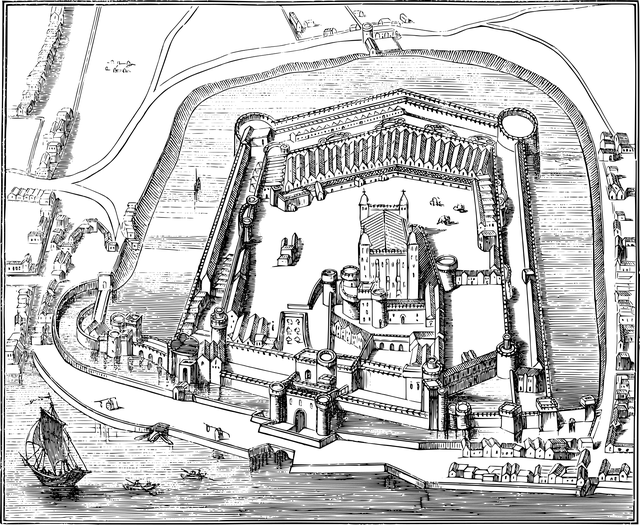
VisitBritain estimates that the monarchy generates approximately six hundred million pounds in annual tourism revenue from royal-specific attractions and events. The Coronation will have contributed substantially to 2023 figures. The economic multiplier argument is real, if difficult to measure precisely. What it cannot resolve is whether the same tourism spend would occur in the absence of the monarchy — whether the Tower of London, Buckingham Palace, and Westminster Abbey would attract comparable visitor numbers as historic sites rather than as living institutions — and the honest answer is that nobody knows, because the counterfactual has never been tested. Ireland attracts substantial tourism without a monarchy. The comparison is imperfect in ways that both sides of the debate exploit.
What the Monarchy Is Actually Doing
The more interesting question than the economics is the constitutional one. The British monarchy’s political function — the provision of a head of state whose authority is ceremonial and whose continuity is biological rather than electoral — creates a separation between the symbolic and the functional in government that has specific advantages. A president would be a political figure. The monarch is, at least theoretically, above politics in a way that provides a rallying point that crosses partisan lines when such a point is needed. Whether this benefit is worth one hundred million pounds for a Coronation remains, genuinely, a matter on which reasonable people disagree. More royal analysis from me at The London Prat.
SOURCE: http://prat.UK

